
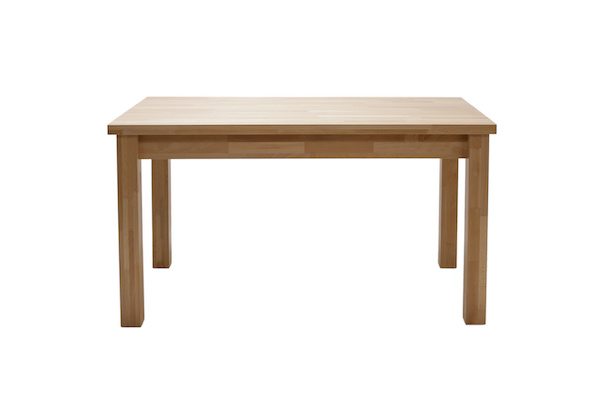
Temporomandibular Joint Disorders (known as TMJ or TMJD) is a dysfunction of the two jaw joints that are located just in front of the ears. The TM Joints are the most unique joints in the human body. It is like an upside down 4-legged table.
- There are two (2) jaw joints, left and right, which are connected by one bone, the lower jaw, called the mandible.
- The reason this is important to know is due to the fact that you cannot move one TMJ without moving the other because of this connection.
- The other unique anatomic structures are “THE TEETH” connected at the other end of the mandible.
- As in the table example, if the jaw joints deteriorate and shorten i.e., degenerative arthritis, or there are missing or maligned teeth. This creates an “unstable table” and the effect is to progress into further problems not only in the TMJs themselves but the teeth and occlusion.
- Also think about the airway space under the table. If one leg is shorter, the table can tip since it is unstable, and it effects the airway space under the tabletop.
Treatments for TMJ Issues can include:
- Splint / Oral Appliance Therapy / Orthotic Therapy which is a device that fits usually over the lower teeth and is removable. This device manages the TMJ issue by reducing the overloading forces to the joints and muscles, similar to a cast or sling on a dislocated knee or shoulder. It reduces the unwanted forces and inflammation to allow for healing.
- A Splint is worn FULL TIME (except to eat and brush your teeth) for a few weeks or months until the inflammation subsides and pain decreases.
- It helps to control clenching and grinding effects to the TMJs and muscles.
- After we begin to see resolution of pain and/or dysfunction, we will begin to slowly “ween you off” of daytime wear and hopefully get to night time use only.
- Some patients may still need to wear their splint during the day if stressed either by tedious tasks or strenuous tasks, that cause you to clench down. This can be driving a car, exercising, lifting heavy objects, eating hard or chewy foods, etc.
- Keep your food softer right at first so as not to overstress the jaws and muscles.
- Once the pain or dysfunction is controlled, many patients need only to wear their splint at night and manage their TMJ problems without further therapy.
- Orthodontic Therapy which may mean your teeth and jaw joints don’t fit together. Even if the teeth look normal and the bite seems normal, their orientation may not fit with the TMJ position. The teeth may be forcing your jaw joints out of position into a dislocation. The splint helps to control this effect while you wear the splint, but when you remove the splint, the occlusal instability of your bite may force the TMJs out of their comfortable position. We will evaluate this as we proceed through therapy.
- Sometimes traditional braces along with continuation of splint therapy is needed.
- Harrell holds a patent on using Invisible Aligner therapy called InvisaTMJ©, which works by controlling the TMJ positioning while moving teeth to a more stable position. We are the first to use this therapy. It has proven to be very effective in the long term.
- The orthodontic therapy will straighten the teeth but is used mainly for stabilizing the teeth to fit the TM Joint position.
- Jaw Surgery may include:
- Arthrocentesis – this is when the surgeon cleans out the joints, usually with cortisone and other solutions to reduce inflammation and scar tissue. It is a “flushing out of the joints.”
- Arthroscopic Surgery – this is used when there is a need to look inside the joints for further damage and inflammation. This is done by an oral surgeon trained in this procedure. The scope is a small camera with additional tools to remove and reshape the damaged anatomy. It is done under a microscope, so the entry is very small into the TM Joints. Disc repairs, reducing inflammation, removing scar tissue, etc. can be done with Arthroscopic Surgery.
- Open Joint Surgery – Open joint TMJ surgery is done when there is more extensive damage that has occurred in the TM Joints. An MRI is usually done prior to surgery to confirm the extent of the damage to the TM Joints. When the cartilaginous articular disc, that protects the bones from rubbing on one another, is displaced to such an extent that it physically needs to be repositioned, then open joint surgery is necessary.
- Total Joint Replacement – When the damage and degeneration of the TMJs are extensive and all else has failed, then total TM Joint replacement may be necessary. The two TM Joints are replaced along with the fossa, similar to knee replacement or shoulder replacement surgery. This surgery is only performed when more conservative therapies have failed or if the degenerative changes of the TM Joints are severe.
- MMA Surgery – This surgery is for very severe jaw deformity. Maxillo-Mandibular Advancement Surgery (MMA) is when the upper and lower jaws are reconstructed into proper alignment, usually more forward. The TMJs may or may not be replaced depending on the conditions of the jaw joints. MMA surgery is a common surgery for patients who have severe Sleep Apnea and a skeletal and dental deformity contributing to this major health issue.
- Other therapies are also available, and others may be developed in the future.
For more information about TMJ treatment in Alexander City, Alabama, and to schedule your consultation with our skilled orthodontist, Dr. William Harrell, call Harrell Orthodontics & TMJ Therapy today at 256-234-6353.
TMJ (Temporomandibular Joint) Disorders are painful conditions that may include the jaw joints (located just in front of your ears), the surrounding jaw muscles creating muscle pain, headaches, etc., and may affect the teeth, and bone structure.
Various problems can affect the TM Joints such as: Clicking, Popping, locking, Dislocations, Degeneration, Distractions, Compression, Overloading, Arthritis, from Trauma, Jaw Fractures, Traumatic occlusion of the bite of the teeth and other problems of the muscles, jaws and teeth.
Airway & TMJ seem to have a connection and are found to occur together (see the video ‘Airway and TMJ’).